
The Future of Interior Staging: AI vs Traditional Staging
Reimagine Your Yard · 16 October 2026
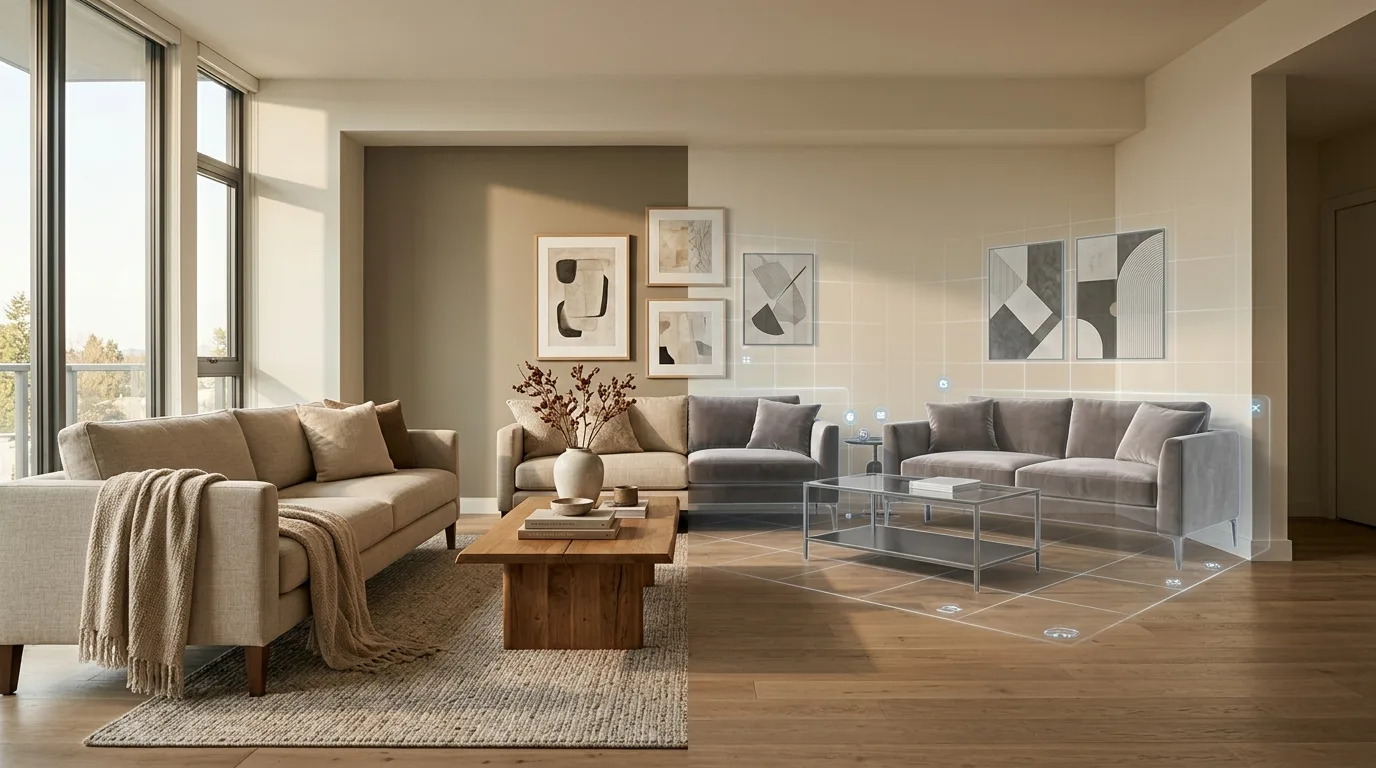
Staging a home has long been one of the most effective strategies for realtors, property developers, and homeowners looking to sell fast and at a top-tier market price. When buyers tour a home, they rarely want to view stark, cold empty rooms or clutter left behind by previous occupants; they want to imagine their own future lifestyle. Traditionally, achieving this aspirational look required thousands of dollars, bulky moving trucks, and weeks of coordination. Today, AI interior staging is fundamentally disrupting the real estate industry, giving property owners the power to transform vacant properties into exquisitely designed spaces with the click of a button.
As virtual design technology advances rapidly, many real estate professionals and sellers are asking: Can virtual solutions truly replace traditional physical staging? Or is the ultimate solution a hybrid model combining both worlds? In this comprehensive breakdown, we explore the mechanics, costs, advantages, and future trajectory of AI interior staging versus traditional physical staging to help you decide the best approach for your property.
Understanding Traditional Physical Staging: The Established Heavyweight
For decades, physical home staging has been the gold standard for property marketing. Professional interior stagers assess a home, curate a temporary inventory of furniture, art, and decor, and physically install these items throughout the residence. The objective is to highlight architectural strengths, soften awkward floor plans, and create an emotional connection for buyers during open house walk-throughs.
The Advantages of Physical Staging
The primary benefit of physical staging is tactile engagement. When prospective buyers step into a home, they can sit on the sofa, touch the marble dining table, and physically feel the scale of each room. This tangible experience creates an immediate emotional connection that can be difficult to replicate purely through 2D photographs on a screen. Physical staging also ensures that the home looks identical in person as it does in online marketing materials.
The Pain Points: High Costs and Logistical Friction
Despite its proven track record, traditional physical staging comes with significant drawbacks:
- Extremely High Cost: Staging an average three-bedroom home physically often costs between $3,000 and $10,000 for a standard three-month rental contract, with recurring monthly fees if the property remains on the market longer.
- Long Prep Times: Sourcing, transporting, and arranging furniture takes time. Real estate agents often wait two to three weeks just to prepare a home for photos and open houses.
- Risk of Property Damage: Moving heavy furniture in and out of a home carries an inherent risk of scratching hardwood floors, scuffing freshly painted walls, or damaging doorways.
- Static Design Choices: Once physical furniture is placed, you are locked into that single aesthetic. If a potential buyer dislikes mid-century modern design, you cannot easily swap out the living room set for a Scandinavian or contemporary look.
The Rise of AI Interior Staging: Speed, Scale, and Customisation
As home searches have migrated almost entirely online—with over 90% of home buyers starting their journey on property portals—visual presentation on digital listings has become paramount. This digital-first mindset opened the door for virtual staging, which has recently evolved from laborious manual 3D rendering into lightning-fast, intelligent photorealistic design powered by artificial intelligence.
Instant Turnaround at a Fraction of the Cost
While physical staging requires weeks and thousands of dollars, modern virtual staging tools generate high-definition photorealistic room transformations in seconds or minutes. Instead of spending thousands on furniture rentals, property owners can digitally stage an entire residence for a tiny fraction of the price. This frees up crucial marketing budgets for targeted online advertising, professional photography, and open-house events.
Unrivalled Style Flexibility
One of the most profound advantages of artificial intelligence in design is versatility. Every home buyer possesses unique tastes. A young urban couple might gravitate toward minimalist modern aesthetics, while a growing family might prefer warm, traditional farmhouse decor. Modern visual platforms allow creators to render multiple design variations of the exact same space. You can market a property listing with several decor options, allowing diverse buyer demographics to visualize the space according to their personal taste.
Head-to-Head Comparison: AI vs Traditional Staging
To evaluate which method suits your specific goals, let's examine how traditional physical staging compares to modern virtual solutions across core performance criteria.
1. Financial Investment: Physical staging requires significant upfront capital, including staging fees, delivery costs, insurance, and monthly rental fees. Virtual solutions require minimal software investment, eliminating shipping and rental overhead entirely.
2. Time to Market: Physical staging requires scheduling consultations, inventory delivery, and setup, taking 7 to 21 days on average. AI tools generate furnished room concepts instantly from a single digital photo, enabling listings to go live immediately.
3. Versatility & Style Testing: Physical staging locks you into one physical setup. Virtual technology allows you to experiment with modern, industrial, bohemian, or traditional themes instantly to see what resonates best with your audience.
4. In-Person Open House Experience: Physical staging provides real furniture during live walkthroughs. Virtual staging requires setting up printed display boards or digital tablets during open houses to show buyers how the empty room looks fully decorated.
How to Use Next-Generation AI Staging Tools Today
Integrating artificial intelligence into your real estate or home design workflow no longer requires specialized technical skills. Platforms like Reimagine Your Yard make high-end exterior, landscape, and room visualization effortless for homeowners, buyers, and professionals alike.
1. Furnish Empty Rooms Instantly
If you are trying to market or renovate an empty property, you don't need to guess how furniture will fit. Using the Design Studio at Reimagine Your Yard, you can upload a photo of a vacant room and select the "Furnish an empty room" option within the Interior mode. The intelligent engine analyzes the room's proportions, lighting, and architectural details to place beautifully proportioned sofas, rugs, lighting, and art instantly.
2. Test Specific Furniture Pieces with Product Visualiser
When you transition from general staging to purchasing actual items, generic renders aren't always enough. This is where specialized tools excel. By using the Reimagine Your Yard Product Visualiser, you can upload a photo of your actual room alongside a photo of a specific sofa, dining table, or accent chair you are considering buying. The system seamlessly integrates that specific item into your space photo, giving you full confidence before making costly purchasing decisions.
3. Interactive 3D Walkthroughs for Immersive Viewing
For high-end listings where static photos aren't enough, spatial AI offers next-level immersion. Using advanced 3D spatial engines (like World Labs integrations, accessible for 5 credits after an initial credit top-up), physical spaces can be transformed into interactive 3D walkthroughs. This allows prospective remote buyers to navigate through a staged home as if they were walking through it in real life.
Practical Tips for a Successful Virtual Staging Workflow
To achieve the highest level of realism and buyer engagement when using digital design tools, follow these best practices:
- Capture High-Quality Base Photos: Ensure your original photos are well-lit, taken from eye-level corner perspectives, and free from lens distortion or extreme wide-angle stretching.
- Maintain Realistic Spatial Scale: Keep traffic flow in mind. Avoid cluttering smaller rooms with oversized sectional sofas or massive dining sets that obscure architectural highlights like fireplaces or floor-to-ceiling windows.
- Be Transparent on Property Listings: Always label virtually staged photos clearly in real estate marketing materials (e.g., "Virtually staged for visualization purposes"). Disclosing virtual enhancements builds trust with buyers when they arrive for physical tours.
- Provide Empty and Staged Pairs: Include both the original vacant room photo and the staged photo in your listing sequence. This allows buyers to appreciate the raw square footage while simultaneously grasping the room's true potential.
The Verdict: What Lies Ahead for Interior Design and Staging?
The debate between physical and virtual staging is shifting from a rivalry to a powerful synergy. While high-value luxury estates may still utilize physical staging for high-stakes open houses, AI interior staging has undeniably won the digital realm. It provides unmatched speed, flexibility, and cost-efficiency, democratising high-end interior design for every homeowner and real estate agent.
As rendering quality reaches true photorealism and spatial 3D environments become standard, virtual design tools will remain the primary engine for property marketing and residential planning. Ready to transform your property listing or interior design project? Head over to the Reimagine Your Yard Design Studio today to furnish empty rooms, visualize real products, and unlock the full potential of your home in seconds.